



Planning a drive up to JB this weekend? Or maybe it’s a late-night airport run along the ECP. Either way, your car needs to be ready – not just clean and fuelled up, but mechanically sound where it counts.
Most drivers in Singapore service their cars once every six months and assume everything is fine in between. But tyres lose pressure in our heat. Batteries drain faster than you’d expect. And rims pick up damage from potholes you barely noticed.
I’ve spent over a decade working with drivers across the island, and the same six issues come up again and again – usually after something has already gone wrong. This guide walks you through each one so you can catch problems early, stay safe, and avoid overpaying for emergency fixes at 2am.
Check Your Tyre Tread and Pressure Before You Hit the Road
Singapore’s roads are well-maintained, but they’re also consistently wet. Heavy afternoon downpours hit without warning, and worn tread on slick tarmac is a recipe for aquaplaning – especially at expressway speeds on the PIE or SLE.
Here’s what to do before any long drive:
Check your tread depth. The legal minimum in Singapore is 1.6mm, but most tyre professionals recommend replacing at 2mm. You can use the old 20-cent coin trick – slot it into the tread groove. If you can see the full border of the coin, your tread is too shallow.
Check your tyre pressure. Under-inflated tyres increase fuel consumption, reduce handling responsiveness, and wear unevenly. Over-inflated tyres give you a harsher ride and less grip. Your vehicle’s recommended PSI is printed on a sticker inside the driver’s door jamb – not on the tyre itself (that number is the maximum, not the ideal).
A good habit: check pressure every two weeks. Singapore’s heat causes air to expand and contract more than you’d think, so readings fluctuate even if there’s no leak.
If you’re running performance tyres like the Radar Dimax range, pressure management matters even more. These tyres are engineered for grip and responsiveness, and they perform best within a tight PSI window. Running them soft defeats the purpose.
Pro tip: Don’t check pressure right after driving. Tyres heat up on the road and give you a false high reading. Check them cold – ideally first thing in the morning.
When to Repair a Tyre and When to Replace It Entirely

A nail in the tread doesn’t always mean you need a new tyre. But a lot of drivers get talked into tyre replacements they don’t need – or worse, keep driving on damage that should have been fixed immediately.
When a repair is enough:
- The puncture is in the central tread area (not the sidewall)
- The object that caused it is smaller than 6mm in diameter
- There’s only one puncture, and it hasn’t been previously repaired in the same spot
- The puncture is tested and not leaking after repair
A proper tyre repair in Singapore involves removing the tyre from the rim, inspecting the inner lining, and applying a combination plug-patch from the inside. If a shop only pushes a plug in from the outside without dismounting the tyre, that’s a temporary fix at best.
When you need to replace:
- Sidewall damage (bulges, cuts, or cracks) – this is non-negotiable
- Tread depth below 1.6mm
- Uneven wear patterns that indicate alignment or suspension problems
- The tyre has been repaired more than once already
For drivers who cover serious mileage – Grab drivers, sales reps doing cross-island routes daily – I generally recommend looking at tyres every 30,000 to 40,000 km. If you’re choosing a replacement, the Radar Dimax tires lineup offers strong wet-weather performance that suits Singapore’s climate well, with options across sedan, SUV, and performance fitments.
Why Wheel Alignment Matters More on Singapore’s Expressways
Wheel alignment isn’t glamorous. Nobody posts about it on social media. But misaligned wheels will cost you money, wear your tyres unevenly, and – at highway speeds – make your car pull to one side in a way that’s both annoying and dangerous.
Singapore’s roads are smooth by regional standards, but we still have speed bumps, carpark ramps, and the occasional pothole near construction zones along the CTE and KPE. Each impact shifts your alignment incrementally. Over months, those small shifts add up.
Signs your alignment is off:
- Your steering wheel isn’t centred when driving straight
- The car drifts left or right when you let go of the wheel briefly
- You notice uneven tyre wear – one edge wearing faster than the other
- A vibration through the steering wheel at speeds above 80 km/h
Get your car alignment checked every 20,000 km, or immediately after hitting a major pothole or kerb. It’s a 30-minute job that protects tyres costing $150–$400 each. The math speaks for itself.
If you’re also replacing tyre rims in Singapore, always get an alignment done at the same time. New rims with old alignment settings won’t ride right.
How to Spot Early Signs of a Failing Car Battery
Dead batteries are the number one reason for roadside assistance calls in Singapore. And the frustrating part? Almost every dead battery gives warning signs weeks before it fails. Most drivers just don’t know what to look for.
Watch for these red flags:
- Slow cranking. If the engine takes noticeably longer to turn over when you start the car, your battery is losing charge capacity. This is the earliest and most reliable sign.
- Dim headlights at idle. If your headlights brighten when you rev the engine and dim when you stop, the battery isn’t holding charge well.
- Electrical glitches. Flickering dashboard lights, the infotainment system resetting itself, or power windows moving slower than usual.
- The battery is more than 2 years old. In Singapore’s heat, car batteries degrade faster than in cooler climates. The 3–5 year lifespan you see quoted online assumes temperate weather. Here, 2 to 3 years is more realistic for most batteries.
- Corrosion on the terminals. White or greenish buildup on the battery posts means chemical reactions are happening faster than they should. Clean the terminals, but treat it as a warning.
When it’s time for a car battery replacement in Singapore, you have a few choices. Budget batteries will get you moving but may only last 18 months. Mid-range options from brands like Varta offer better longevity and more consistent performance in tropical heat — Varta’s Silver Dynamic range, for example, is a popular choice among Singapore drivers for its reliability in high-temperature conditions.
What about emergencies? If your battery dies at midnight in a Woodlands carpark, you need a 24 hrs car battery shop that does car battery on-site replacement – not just a jump start that leaves you stranded again two hours later. Look for a car battery service provider that carries multiple battery brands in-van and can test your alternator on the spot.
Rim Condition – The Safety Check Most Drivers Skip
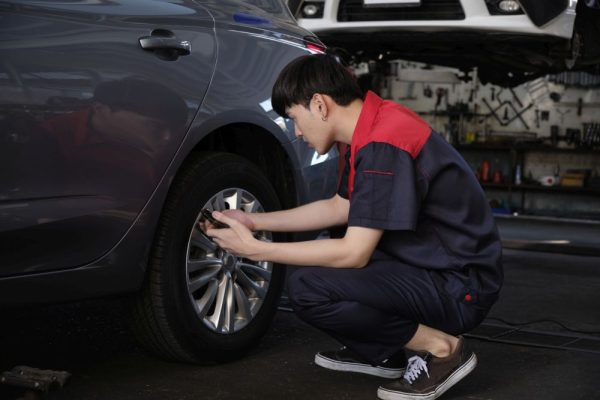
Tyres get all the attention. Rims get ignored until they’re visibly cracked or bent – and by then, the damage has already caused problems you’ve been attributing to other things.
Why rims matter more than you think:
A bent rim won’t hold a proper seal with the tyre bead. That means slow air leaks that you keep topping up, never realising the rim is the root cause. A cracked rim is a structural failure waiting to happen at expressway speeds.
Common causes of rim damage in Singapore:
- Scraping against kerbs during parallel parking (especially common with low-profile tyres)
- Hitting raised drain covers or road imperfections
- Carpark gantry ramps with sharp angles
- Potholes near construction zones
What to inspect: Run your fingers along the inner lip of each rim. Feel for dents, flat spots, or rough patches. Check the outer face for cracks – even hairline ones. If the rim is alloy, look for signs of corrosion where the clear coat has chipped away.
When shopping for replacements, car rim prices in Singapore vary widely. A basic steel rim runs $50–$80 per piece. Alloy rims range from $120 to $500+ depending on brand, size, and finish. Forged rims for performance cars can hit four figures each.
Don’t cheap out on replicas for daily drivers. A good set of tyre rims from a reputable brand costs more upfront but holds up better to Singapore’s conditions and retains resale value if you upgrade later.
Where to Get All of This Done Without Visiting Multiple Workshops
Here’s the real headache most drivers face: you need a tyre check, a battery test, and someone to look at that kerb rash on your rear rim. That’s three different shops, three different queues, and half a Saturday gone.
The smarter approach is finding a single workshop like Arrow Tyres that handles tyres, batteries, and rims under one roof – with technicians who can assess everything in one visit and tell you what actually needs attention versus what can wait.
Look for a provider that offers:
- Tyre repair and replacement with proper balancing
- Car battery service including load testing and on-site replacement
- A range of tyre rims in stock so you’re not waiting weeks for orders
- Alignment services done on the same visit
- After-hours availability – because problems don’t wait for business hours
A workshop that stocks brands like Radar Dimax for tyres and Varta for batteries signals that they’re carrying quality mid-range options, not just whatever’s cheapest from the distributor.
Conclusion
Long drives in Singapore – whether it’s a trip across the Causeway, a weekend at Sentosa, or a late-night airport run – put more stress on your car than daily commuting. Tyres, batteries, and rims are the three areas where small problems become big ones fast, and where a 15-minute check can save you hours of roadside frustration.
Don’t wait for a flat tyre on the BKE or a dead battery outside Changi T4 to find out something was wrong. Build these six checks into your routine every few months, and find a workshop like Arrow Tyres you trust to handle all of them in one go.
Your car carries your family. It deserves more than a glance and a hope.
Frequently Asked Questions
How often should I check my tyre pressure in Singapore?
Every two weeks is ideal. Singapore’s tropical heat causes tyre pressure to fluctuate more than in cooler climates. Even without a puncture, tyres can lose 1–2 PSI per month naturally. Check them cold – before you drive, not after – for the most accurate reading.
Can a punctured tyre always be repaired?
No. A tyre repair is only safe when the puncture is in the central tread area and the damage is small (under 6mm). Sidewall punctures, large gashes, or tyres that have been driven flat for an extended distance need to be replaced. A trustworthy workshop will show you the damage and explain why.
How long does a car battery last in Singapore’s climate?
Typically 1.5 to 2 years. The global average of 3–5 years assumes cooler temperatures. Singapore’s consistent heat accelerates chemical degradation inside the battery. Premium options like the Varta car battery range tend to last longer due to better heat-resistant construction, but even those should be tested annually after the 2-year mark.
What is a fair car rim price in Singapore?
Steel rims cost around $50–$80 each. Alloy rims range from $120 to $500+ depending on size, brand, and design. For most sedan owners, expect to pay $150–$250 per alloy rim for a reliable, good-looking option. Always factor in alignment and balancing costs when budgeting for new tyre rims in Singapore.
Is there a 24-hour car battery replacement service in Singapore?
Yes. Several providers offer 24 hrs car battery shop services with mobile vans that come to your location, test your battery and alternator, and replace the battery on-site. This is far better than a jump start, which only gives you temporary power without fixing the underlying issue.
Are Radar Dimax tires good for Singapore roads?
Radar Dimax tires are well-suited to Singapore’s conditions. The range includes options with strong wet-grip ratings – critical for our frequent rain – and they’re priced competitively against comparable mid-tier brands. They’re a solid choice for drivers who want better-than-budget performance without paying premium-brand prices.