



Ask any car workshop in Singapore what their most common emergency callout is, and the answer is almost always the same: dead batteries. What’s frustrating is that most of these drivers replaced their battery just two years ago. Some even bought a premium brand. And yet, here they are – stuck in a basement carpark with a car that won’t start.
The reason isn’t bad luck or defective batteries. It’s Singapore itself. Our climate and our driving patterns create conditions that shorten battery life far faster than the numbers printed on the box. This article explains why – and what you can actually do about it.
Why Car Batteries Die Faster in Singapore Than in Most Other Countries
Car batteries are electrochemical devices. Inside each one, lead plates sit submerged in a sulfuric acid solution (the electrolyte) that facilitates the chemical reaction producing electricity. Heat accelerates that reaction – which sounds like a good thing, until you realise it also accelerates every destructive process happening inside the battery.
Singapore’s average ambient temperature hovers around 31°C during the day. Under your bonnet, where airflow is limited and the engine radiates heat, temperatures regularly exceed 50°C. At those temperatures, three things happen faster than battery manufacturers planned for:
Electrolyte evaporation. The sulfuric acid solution slowly evaporates, exposing the top portions of the lead plates to air. Exposed plates corrode and lose capacity permanently. In cooler countries, this process takes years. In Singapore, it can become significant within 18 months.
Internal plate corrosion. Heat causes the positive plate grid to corrode faster, thinning the structural framework that holds the active material. Once the grid thins enough, the plate fails – and the battery’s capacity drops sharply.
Accelerated self-discharge. A hot battery discharges faster when the car is parked. If your car sits in an outdoor carpark in direct sun for 8 hours a day, the battery is losing charge even with nothing switched on.
This is why a battery rated for 4 – 5 years in Germany or Japan might only last 2 – 2.5 years here. It’s not a defect – it’s physics.
Short Trips and Stop-Start Traffic – The Silent Battery Killers for Singapore Commuters
Here’s something most drivers don’t realise: your car battery only recharges when the engine is running and the alternator is spinning at sufficient speed. That means highway driving at steady RPMs is ideal for battery health. Stop-start traffic? The opposite.
The average Singapore commute is 10 – 20 minutes of urban driving – traffic lights every 300 metres, heavy braking, and long idling stretches on the AYE or PIE during rush hour. During that kind of driving, the alternator never gets the sustained output needed to fully recharge the battery.
Every time you start your car, the battery dumps a significant burst of energy to the starter motor. If the drive that follows isn’t long enough to replenish that energy, the battery starts each new day slightly more depleted than the last. Over weeks, this cumulative under-charging weakens the battery internally.
Add to that the electrical load of Singapore driving: air conditioning running at full blast from the moment you turn the key, phone charging, dashcam recording, infotainment system streaming. The alternator is juggling all of these demands while trying to recharge a battery that never quite catches up.
If your daily drive is under 20 minutes of city traffic, your battery is chronically under-charged. This is the single biggest reason otherwise “good” batteries die early in Singapore.
How to Tell If the Heat Has Already Damaged Your Car Battery
The good news: a failing battery almost always shows symptoms before it dies completely. The bad news: most people don’t check until they’re stuck.
Here’s a quick carpark inspection you can do yourself in under five minutes:
Check for a swollen casing. Pop the bonnet and look at the battery from the side. If the casing is bulging outward – even slightly – that’s heat damage. The internal gases are building up faster than they’re venting. A swollen battery needs replacing immediately.
Look at the terminals. White, blue, or greenish crust around the battery posts means corrosion. A small amount is normal over time, but heavy buildup indicates the battery is gassing excessively – a sign of internal stress. Clean the terminals with a wire brush, but treat this as a warning, not a fix.
Pay attention to morning starts. The most telling sign is how your car starts after sitting overnight. If the engine cranks slowly – that laboured “rrr-rrr-rrr” instead of a quick “vroom” – the battery is losing its ability to hold charge. This symptom typically appears 2–4 weeks before a complete failure.
Watch for electrical oddities. Dim interior lights at idle, a clock that resets itself, or a sluggish power window can all point to a battery that’s no longer delivering consistent voltage.
If you’re seeing any of these signs, it’s time to get the battery tested professionally. Arrow Tyres’ car battery service includes load testing that tells you exactly how much life is left.
How Long Should a Car Battery Realistically Last in Singapore?
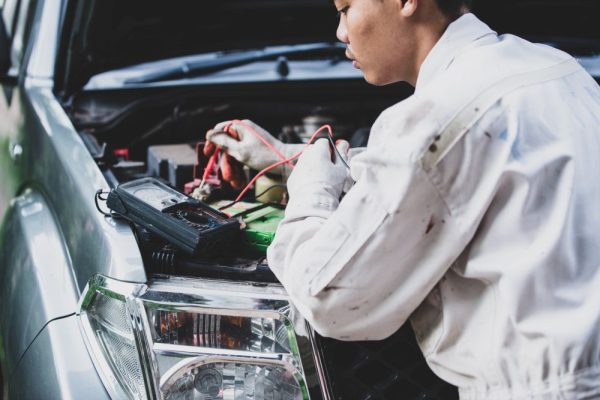
Manufacturer claims are based on testing in temperate climates – average temperatures of 15–20°C. Singapore’s reality is very different. Here’s what you should actually expect:
Standard flooded batteries (MF batteries): 1.5 to 2 years. These are the most common type fitted in budget-conscious replacements. They’re adequate, but they have the least heat resistance and the shortest lifespan in tropical conditions.
Enhanced Flooded Batteries (EFB): 2 to 3 years. EFBs are designed for cars with start-stop systems and handle deeper discharge cycles better. Brands like Amaron (https://arrowtyres.com.sg/car-battery/amaron-battery/) fall into this category and are popular in Singapore for good reason.
Absorbent Glass Mat (AGM) batteries: 3 to 4 years. AGM batteries are sealed, spill-proof, and handle heat and vibration better than flooded types. Varta’s Silver Dynamic AGM range (https://arrowtyres.com.sg/car-battery/varta-battery/) is one of the better-performing options in this class for Singapore conditions.
These numbers assume normal driving patterns. If your commute is mostly short city trips, shave 6–12 months off each estimate. If you drive longer distances regularly, you might squeeze a few extra months out.
For a deeper breakdown of battery types and the technology behind them, Arrow Tyres’ guide on car batteries, start-stop technology, and brands covers this in detail.
Simple Habits That Extend Your Battery Life Between Replacements
You can’t change Singapore’s weather, but you can change the habits that compound its effects.
Take a longer drive once a week. A 30 – 45 minute highway drive (not stop-start traffic) lets the alternator fully recharge the battery. A Sunday morning drive along the East Coast or a loop around the SLE counts. Think of it as exercise for your battery.
Keep the terminals clean. Buy a small wire brush from any hardware store and clean the terminals every 3 – 4 months. Apply a thin layer of petroleum jelly afterward to slow future corrosion. Takes five minutes.
Switch off accessories before turning off the engine. Turn off the air conditioning, radio, and headlights before you switch off the ignition. This reduces the electrical load on the battery during the next startup, which is when it’s under the most stress.
Park in shade when possible. A covered carpark or multi-storey car park keeps under-bonnet temperatures lower. It’s a small thing, but over 365 days it adds up. Outdoor lots with full sun exposure are measurably harder on batteries.
Don’t ignore the early signs. If your car is cranking slowly or your headlights seem dimmer than usual, get a battery test done now – not next month. Catching a failing battery early means you replace it on your terms instead of on the side of the PIE at midnight.
When Good Habits Aren’t Enough – How to Book a Car Battery Change in Singapore
Even with perfect maintenance, every car battery reaches the end of its life. When yours does, the process should be quick and painless.
Arrow Tyres offers car battery replacement in Singapore through both their three workshop locations and a mobile battery replacement service that comes to you. The mobile service includes a load test, terminal cleaning, and proper disposal of the old battery.
If you already know you want a specific brand, Arrow Tyres stocks Amaron and Varta batteries across a range of sizes and fitments. Both are well-suited to Singapore’s climate and available for both workshop and onsite installation.
For emergency car battery replacement – the kind where you’re already stranded – Arrow Tyres operates a 24 hrs car battery shop service. Call 6570 8087 or reach the mobile team and a technician will be dispatched to your location with a fresh battery ready to install.
Conclusion
Singapore’s heat and stop-start driving conditions are genuinely harder on car batteries than what most manufacturers design for. That’s not a sales pitch – it’s what the chemistry says. Knowing this gives you an advantage. Check for warning signs every few months. Take a longer drive weekly. Keep those terminals clean. And when the time comes to replace, don’t wait until you’re stranded – the early signs are there if you know where to look. Your car battery doesn’t owe you five years in this climate. But with the right habits and timely replacement, you’ll never be the driver stuck in the carpark watching everyone else leave.
Frequently Asked Questions
How often should I replace my car battery in Singapore?
Every 2 to 3 years for standard batteries. AGM batteries can last 3 – 4 years. Get a load test done annually after the battery’s second birthday to catch decline early.
Can I replace my car battery myself?
Technically, yes – but modern cars often need the battery management system to be reset after replacement. Incorrect installation can trigger warning lights or affect start-stop functionality. Professional installation ensures the battery is registered to the car’s ECU correctly.
Is mobile car battery replacement available 24 hours in Singapore?
Yes. Arrow Tyres offers 24 hour car battery replacement with a mobile technician who comes to your location, tests the old battery, installs the new one, and disposes of the old unit. Call 6570 8087 anytime.
What’s the difference between an EFB and AGM battery?
EFB (Enhanced Flooded Battery) is an upgraded version of a standard flooded battery with better cycle life. AGM (Absorbent Glass Mat) uses fibreglass mats to hold the electrolyte, making it sealed, spill-proof, and more heat-resistant. AGM lasts longer and performs better in Singapore conditions but costs more. Arrow Tyres’ battery guide (https://arrowtyres.com.sg/understanding-car-batteries-start-stop-technology-brands/) explains the differences in detail.
Does leaving my car parked for several days damage the battery?
It can. In Singapore’s heat, a parked car’s battery self-discharges faster than in cooler climates. If you leave your car unused for more than a week, especially in an open-air carpark, consider using a trickle charger or disconnecting the negative terminal to preserve charge.
Which car battery brand is best for Singapore?
Amaron and Varta are the two most popular choices for Singapore conditions. Amaron’s Hi Life range offers strong heat resistance at a mid-range price. Varta’s Silver Dynamic AGM range provides the longest lifespan and best performance for premium vehicles. The right choice depends on your car type and budget.